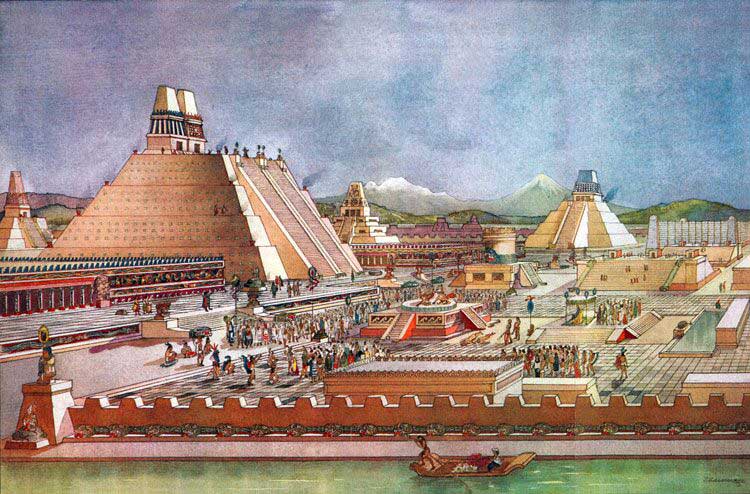
The Aztec empire was one of the largest civilizations of Mesoamerica. The founding peoples first settled in what is modern-day Mexico around the late 1100s and early 1200s. The empire itself was developed in the 1300s with the merging of three city-states. The triad was formed by the Mexica, Acolhua, and Tepaneca people. Overall, the empire’s size was due, in part, to its conquests. The Aztec capital of Tenochtitlan is known as a holy city, erected for religious fulfillment but its complexities represent the advanced nature of its people. Scholars believe that it may have had over 200,000 residents. The population consisted of peoples of diverse titles and occupations. Artists, military, politicians, religious figures, and agricultural specialists and more were part of the empire. Tenochtitlan was the metropolitan area of its time. The city was full of architectural magnificence, commerce, recreational sites, and institutions.
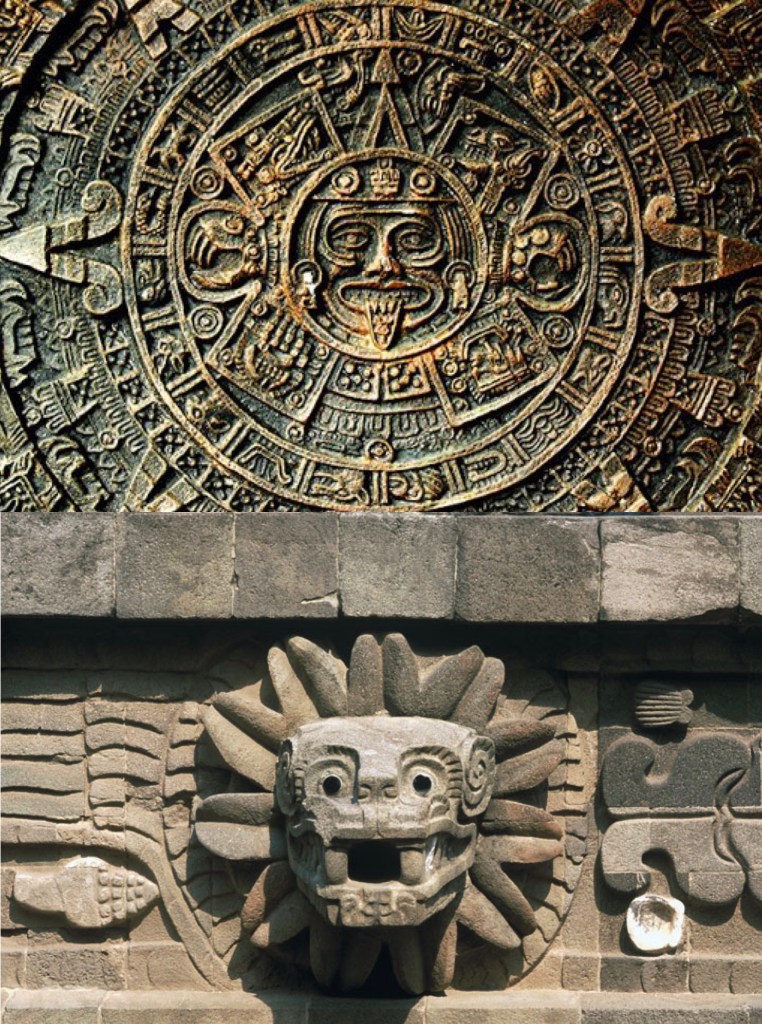
Aztec culture is most popularly known for its intricate calendar system and ritual human sacrifices. According to the book Aztec and Maya Myths “human sacrifice arose out of a basic premise, a recognition of the active role and responsibility of people for the maintenance of cosmic balance” (Karl Taube 17). Their religion was centered around polytheism and included deities that reflected animals and nature. Consequently, much of the structures of the capital city are planned specifically to emphasize features of the natural world (i.e. sunrises, sunsets, etc.). Beyond these factors, the civilization made developments in technology, art, and science that surpassed those of the period. Taube’s Aztec and Maya Myths also offers a magnificent vision of the culture. Taube claims “the people of this region inhabited great cities with complex forms of administration and government, employed intricate systems of writing and calendrics, and celebrated refined poetry, music, dance, and art” (7).
The arrival of Hernando Cortes, a Spanish colonist, sent the empire into a downward spiral. The Aztecs engaged in multiple battles against Cortes, eventually leading to the seizure of surrounding cities and the capital. Scholars believe that the arrival of new diseases (such as smallpox), thanks to the Spanish, may have contributed to the Aztec’s loss of military strength.
 Mythology and Ideology